DSC00989.jpg

Events

Events & Classes


Lama Chopa Tsok Offering
Dec
14
10:00 AM10:00

Lama Chopa Tsok Offering

  • Nechung Dorje Drayang Ling, Wood Valley Temple & Retreat (map)
  • Google Calendar ICS

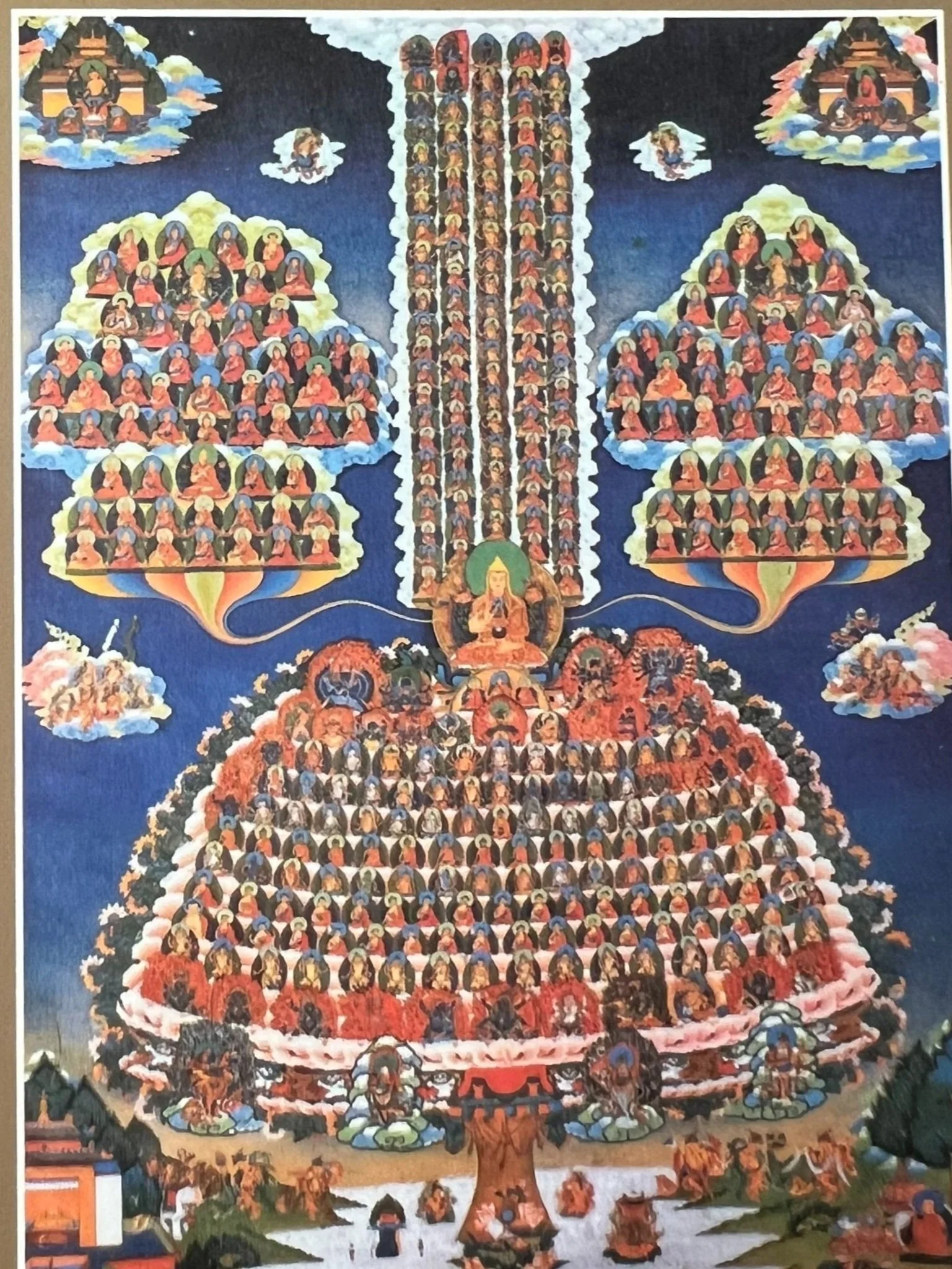
Lama Chopa consists of devotion in honor of one’s teachers.

This particular practice was written by the first Panchen Lama. As with other Tibetan meditations, this practice begins with refuge, generating the altruistic mind, presentation of offering, visualization, contemplating the stages of the spiritual path, and closes with a dedication of merit to benefit all beings

This text is beautifully translated into English, there are also Tibetan phonetics to follow the chant.

View Event →
Teaching and Commentary on Bodhicaryavatara with Geshe Ngawang Chonjor
Dec
14
3:00 PM15:00

Teaching and Commentary on Bodhicaryavatara with Geshe Ngawang Chonjor

Teaching and Commentary on Bodhicaryavatara
”Way of the Bodhisattva”

with Geshe Ngawang Chonjor,
translation by Yeng Yeng (Tenzin Nyima)

Geshe Ngawang Chonjor will give a commentary on Bodhicaryavatara, The Way of The Bodhisattva.
Composed by the Indian scholar Shantideva, esteemed in Tibet as one of the great masters. This classic text mainly focuses on the cultivation and enhancement of bodhicitta, and in the wisdom chapter, it expounds the Madhyamaka viewpoint of emptiness.

The class will start from December 7th, Sunday, 3:00-4:30 PM, and continue at the same time weekly. You are welcome to attend either in person at the temple or by Zoom.

You may access the text and Zoom through the buttons below.

Bodhicaryavatara
Zoom

Meeting ID: 827 0425 5724 Passcode: NDDL
One tap mobile +13462487799,,82704255724#,,,,*830333# +12532158782,,82704255724#,,,,*830333#


“Just as on a dark night black with clouds,
The sudden lightning glares and all is clearly shown, Likewise rarely, through the Buddha’s power,
Virtuous thoughts rise, brief and transient, in the world”
Bodhicaryavatara


Geshe Ngawang is currently the monk in residence at Wood Valley Temple. Geshe-la entered Drubthob Monastery in Kathmandu, Nepal at the age of eight, and studied there for ten years, then continued on to Drepung Losaling in South India where he persevered to achieve the highly prestigious Geshe Lharampa degree. Additionally, he studied tantra at Gyumed Tantric Monastery, and mastered the various skills of musical instruments used in monastic chanting, creating butter sculptures and performing various rituals.

Yeng Yeng (Tenzin Nyima) is a Chartered Accountant who worked in a Big Four accounting firm in Singapore for 13 years before relocating to Dharamsala, India in 2009 to begin her studies in Tibetan language and Buddhist Philosophy. She spent 11 years in Dharamsala, using her newly acquired proficiency to study the great Indian Buddhist classical texts, such as Pramanavartika (Valid Cognition), Abhisamayalankara (Ornament of Clear Realization) and Madhyamaka (Middle Way). She is currently translating online for her teacher Geshe Jampa Phelgya. She is also working on a written translation project on the biography of Drupka Rinpoche Ngawang Lobsang Jigme from Tibetan to English.

Donations are requested. Your contribution helps with Geshela’s residence and operation of the temple. We appreciate your generosity and support.

View Event →
Commentary on “Words of my Perfect Teacher” with Nechung Choktrul Rinpoche
Dec
20
5:30 PM17:30

Commentary on “Words of my Perfect Teacher” with Nechung Choktrul Rinpoche

Nechung Choktrul Rinpoche is continuing his commentary on “Words of My Perfect Teacher” (Tibetan: Kun-zang La-may Zhal-lung) by Paltrul Rinpoche.
The classes will be broadcast on Zoom on Saturdays from 5:30 to 7 pm. We are currently on the second chapter of Part 2 on Arousing Bodhicitta.
If you’d like to join the class, please email nechung@nechung.org
Donations are requested, we appreciate your generosity and support.

The text is available through the links below.

Words of My Perfect Teacher


Bodhicitta - the altruistic mind of enlightenment, in addition to the wisdom realizing emptiness, is an essential aspect of of Mahayana Buddhism. Bodhicitta involves contemplation on the Four Immeasurable Qualities of Loving kindness, Compassion, Joy, and Equanimity. Additionally, there are the practices of the Six Perfections: Generosity, Ethical Conduct, Patience, Perseverance, Meditation, Wisdom.

"All the three worlds’ misery comes from wanting happiness for ourselves; and all virtues and happiness is born of a mind that wishes others well. So following the example  of the teacher of all gods and human beings, generate the supreme mind that is set upon unsurpassed awakening.”
-Khenchen Jigme Phuntsok Rinpoche

“For as long as space endures
And for as long as living being remain
Until then, may I too abide
To dispel the misery of the world.”
-Shantideva’s Bodhicaryavatara (The Way of the Bodhisattva)

Part One: common preliminaries

  1. Difficulty of Obtaining Leisure and Endowment

  2. Transitory Nature of Life

  3. Shortcomings of Cyclic Existence

  4. Cause & Effect of Karma

  5. Benefits of Liberation

  6. Following a Spiritual Teacher

Part Two: Uncommon Preliminaries

  1. Taking Refuge

  2. Arousing Bodhicitta

  3. Meditating on the Teacher as Vajrasattva

  4. Offering the Mandala to Accumulate Merit and Wisdom

  5. The Kusali's Accumulation

  6. Guru Yoga

View Event →
Sunday Tara Puja
Dec
21
10:00 AM10:00

Sunday Tara Puja

  • Nechung Dorje Drayang Ling, Wood Valley Temple & Retreat (map)
  • Google Calendar ICS

On Sundays when there are no teaching programs, the standard practice is Green Tara with recitations of the 21 Tara praises. Tara represents enlightened activity, her practice brings fulfillment of wishes, and elimination of obstacles which hinder one’s life and spiritual practice. She has 21 manifestations, each form symbolizes a different aspect and may appear in various colors & appearances — such as the Red Tara (energy/power), Yellow Tara (increase), etc. — offering a different energy or virtue to help on our spiritual paths. Green Tara is the embodiment of all the aspects of Tara & is most commonly practiced..

The process of the practice begins with taking Refuge and engendering the altruistic mind (bodhicitta), invocation of Tara & enlightened beings, presentation of offerings, visualization of Tara, mantra recitation, dissolution and dedication.

View Event →
Teaching and Commentary on Bodhicaryavatara with Geshe Ngawang Chonjor
Dec
21
3:00 PM15:00

Teaching and Commentary on Bodhicaryavatara with Geshe Ngawang Chonjor

Teaching and Commentary on Bodhicaryavatara
”Way of the Bodhisattva”

with Geshe Ngawang Chonjor,
translation by Yeng Yeng (Tenzin Nyima)

Geshe Ngawang Chonjor will give a commentary on Bodhicaryavatara, The Way of The Bodhisattva.
Composed by the Indian scholar Shantideva, esteemed in Tibet as one of the great masters. This classic text mainly focuses on the cultivation and enhancement of bodhicitta, and in the wisdom chapter, it expounds the Madhyamaka viewpoint of emptiness.

The class will start from December 7th, Sunday, 3:00-4:30 PM, and continue at the same time weekly. You are welcome to attend either in person at the temple or by Zoom.

You may access the text and Zoom through the buttons below.

Bodhicaryavatara
Zoom

Meeting ID: 827 0425 5724 Passcode: NDDL
One tap mobile +13462487799,,82704255724#,,,,*830333# +12532158782,,82704255724#,,,,*830333#


“Just as on a dark night black with clouds,
The sudden lightning glares and all is clearly shown, Likewise rarely, through the Buddha’s power,
Virtuous thoughts rise, brief and transient, in the world”
Bodhicaryavatara


Geshe Ngawang is currently the monk in residence at Wood Valley Temple. Geshe-la entered Drubthob Monastery in Kathmandu, Nepal at the age of eight, and studied there for ten years, then continued on to Drepung Losaling in South India where he persevered to achieve the highly prestigious Geshe Lharampa degree. Additionally, he studied tantra at Gyumed Tantric Monastery, and mastered the various skills of musical instruments used in monastic chanting, creating butter sculptures and performing various rituals.

Yeng Yeng (Tenzin Nyima) is a Chartered Accountant who worked in a Big Four accounting firm in Singapore for 13 years before relocating to Dharamsala, India in 2009 to begin her studies in Tibetan language and Buddhist Philosophy. She spent 11 years in Dharamsala, using her newly acquired proficiency to study the great Indian Buddhist classical texts, such as Pramanavartika (Valid Cognition), Abhisamayalankara (Ornament of Clear Realization) and Madhyamaka (Middle Way). She is currently translating online for her teacher Geshe Jampa Phelgya. She is also working on a written translation project on the biography of Drupka Rinpoche Ngawang Lobsang Jigme from Tibetan to English.

Donations are requested. Your contribution helps with Geshela’s residence and operation of the temple. We appreciate your generosity and support.

View Event →
Commentary on “Words of my Perfect Teacher” with Nechung Choktrul Rinpoche
Dec
27
5:30 PM17:30

Commentary on “Words of my Perfect Teacher” with Nechung Choktrul Rinpoche

Nechung Choktrul Rinpoche is continuing his commentary on “Words of My Perfect Teacher” (Tibetan: Kun-zang La-may Zhal-lung) by Paltrul Rinpoche.
The classes will be broadcast on Zoom on Saturdays from 5:30 to 7 pm. We are currently on the second chapter of Part 2 on Arousing Bodhicitta.
If you’d like to join the class, please email nechung@nechung.org
Donations are requested, we appreciate your generosity and support.

The text is available through the links below.

Words of My Perfect Teacher


Bodhicitta - the altruistic mind of enlightenment, in addition to the wisdom realizing emptiness, is an essential aspect of of Mahayana Buddhism. Bodhicitta involves contemplation on the Four Immeasurable Qualities of Loving kindness, Compassion, Joy, and Equanimity. Additionally, there are the practices of the Six Perfections: Generosity, Ethical Conduct, Patience, Perseverance, Meditation, Wisdom.

"All the three worlds’ misery comes from wanting happiness for ourselves; and all virtues and happiness is born of a mind that wishes others well. So following the example  of the teacher of all gods and human beings, generate the supreme mind that is set upon unsurpassed awakening.”
-Khenchen Jigme Phuntsok Rinpoche

“For as long as space endures
And for as long as living being remain
Until then, may I too abide
To dispel the misery of the world.”
-Shantideva’s Bodhicaryavatara (The Way of the Bodhisattva)

Part One: common preliminaries

  1. Difficulty of Obtaining Leisure and Endowment

  2. Transitory Nature of Life

  3. Shortcomings of Cyclic Existence

  4. Cause & Effect of Karma

  5. Benefits of Liberation

  6. Following a Spiritual Teacher

Part Two: Uncommon Preliminaries

  1. Taking Refuge

  2. Arousing Bodhicitta

  3. Meditating on the Teacher as Vajrasattva

  4. Offering the Mandala to Accumulate Merit and Wisdom

  5. The Kusali's Accumulation

  6. Guru Yoga

View Event →
Guru Padmasambhava Practice
Dec
28
10:00 AM10:00

Guru Padmasambhava Practice

  • Nechung Dorje Drayang Ling, Wood Valley Temple & Retreat (map)
  • Google Calendar ICS

Guru Rinpoche or Padmasambhava was one of the Indian masters responsible for bringing Buddhism to Tibet in the 8th century. He helped establish the first monastery, Samye, and it was during his tenure that the first monks were ordained. Padmasambhava also tamed many of the negative forces that obstructed the teachings & practice of Buddhism, converting powerful entities into protective guardians of the Dharma. Nechung Monastery’s roots are associated with this preeminent master.

Riwo Sangchö is a mountain incense offering to enlightened beings and local spirits for purification and removal of interferences.

View Event →
Teaching and Commentary on Bodhicaryavatara with Geshe Ngawang Chonjor
Dec
28
3:00 PM15:00

Teaching and Commentary on Bodhicaryavatara with Geshe Ngawang Chonjor

Teaching and Commentary on Bodhicaryavatara
”Way of the Bodhisattva”

with Geshe Ngawang Chonjor,
translation by Yeng Yeng (Tenzin Nyima)

Geshe Ngawang Chonjor will give a commentary on Bodhicaryavatara, The Way of The Bodhisattva.
Composed by the Indian scholar Shantideva, esteemed in Tibet as one of the great masters. This classic text mainly focuses on the cultivation and enhancement of bodhicitta, and in the wisdom chapter, it expounds the Madhyamaka viewpoint of emptiness.

The class will start from December 7th, Sunday, 3:00-4:30 PM, and continue at the same time weekly. You are welcome to attend either in person at the temple or by Zoom.

You may access the text and Zoom through the buttons below.

Bodhicaryavatara
Zoom

Meeting ID: 827 0425 5724 Passcode: NDDL
One tap mobile +13462487799,,82704255724#,,,,*830333# +12532158782,,82704255724#,,,,*830333#


“Just as on a dark night black with clouds,
The sudden lightning glares and all is clearly shown, Likewise rarely, through the Buddha’s power,
Virtuous thoughts rise, brief and transient, in the world”
Bodhicaryavatara


Geshe Ngawang is currently the monk in residence at Wood Valley Temple. Geshe-la entered Drubthob Monastery in Kathmandu, Nepal at the age of eight, and studied there for ten years, then continued on to Drepung Losaling in South India where he persevered to achieve the highly prestigious Geshe Lharampa degree. Additionally, he studied tantra at Gyumed Tantric Monastery, and mastered the various skills of musical instruments used in monastic chanting, creating butter sculptures and performing various rituals.

Yeng Yeng (Tenzin Nyima) is a Chartered Accountant who worked in a Big Four accounting firm in Singapore for 13 years before relocating to Dharamsala, India in 2009 to begin her studies in Tibetan language and Buddhist Philosophy. She spent 11 years in Dharamsala, using her newly acquired proficiency to study the great Indian Buddhist classical texts, such as Pramanavartika (Valid Cognition), Abhisamayalankara (Ornament of Clear Realization) and Madhyamaka (Middle Way). She is currently translating online for her teacher Geshe Jampa Phelgya. She is also working on a written translation project on the biography of Drupka Rinpoche Ngawang Lobsang Jigme from Tibetan to English.

Donations are requested. Your contribution helps with Geshela’s residence and operation of the temple. We appreciate your generosity and support.

View Event →

Commentary on “Words of my Perfect Teacher” with Nechung Choktrul Rinpoche
Dec
13
5:30 PM17:30

Commentary on “Words of my Perfect Teacher” with Nechung Choktrul Rinpoche

Nechung Choktrul Rinpoche is continuing his commentary on “Words of My Perfect Teacher” (Tibetan: Kun-zang La-may Zhal-lung) by Paltrul Rinpoche.
The classes will be broadcast on Zoom on Saturdays from 5:30 to 7 pm. We are currently on the second chapter of Part 2 on Arousing Bodhicitta.
If you’d like to join the class, please email nechung@nechung.org
Donations are requested, we appreciate your generosity and support.

The text is available through the links below.

Words of My Perfect Teacher


Bodhicitta - the altruistic mind of enlightenment, in addition to the wisdom realizing emptiness, is an essential aspect of of Mahayana Buddhism. Bodhicitta involves contemplation on the Four Immeasurable Qualities of Loving kindness, Compassion, Joy, and Equanimity. Additionally, there are the practices of the Six Perfections: Generosity, Ethical Conduct, Patience, Perseverance, Meditation, Wisdom.

"All the three worlds’ misery comes from wanting happiness for ourselves; and all virtues and happiness is born of a mind that wishes others well. So following the example  of the teacher of all gods and human beings, generate the supreme mind that is set upon unsurpassed awakening.”
-Khenchen Jigme Phuntsok Rinpoche

“For as long as space endures
And for as long as living being remain
Until then, may I too abide
To dispel the misery of the world.”
-Shantideva’s Bodhicaryavatara (The Way of the Bodhisattva)

Part One: common preliminaries

  1. Difficulty of Obtaining Leisure and Endowment

  2. Transitory Nature of Life

  3. Shortcomings of Cyclic Existence

  4. Cause & Effect of Karma

  5. Benefits of Liberation

  6. Following a Spiritual Teacher

Part Two: Uncommon Preliminaries

  1. Taking Refuge

  2. Arousing Bodhicitta

  3. Meditating on the Teacher as Vajrasattva

  4. Offering the Mandala to Accumulate Merit and Wisdom

  5. The Kusali's Accumulation

  6. Guru Yoga

View Event →
Teaching and Commentary on Bodhicaryavatara with Geshe Ngawang Chonjor
Dec
7
3:00 PM15:00

Teaching and Commentary on Bodhicaryavatara with Geshe Ngawang Chonjor

Teaching and Commentary on Bodhicaryavatara
”Way of the Bodhisattva”

with Geshe Ngawang Chonjor,
translation by Yeng Yeng (Tenzin Nyima)

Geshe Ngawang Chonjor will give a commentary on Bodhicaryavatara, The Way of The Bodhisattva.
Composed by the Indian scholar Shantideva, esteemed in Tibet as one of the great masters. This classic text mainly focuses on the cultivation and enhancement of bodhicitta, and in the wisdom chapter, it expounds the Madhyamaka viewpoint of emptiness.

The class will start from December 7th, Sunday, 3:00-4:30 PM, and continue at the same time weekly. You are welcome to attend either in person at the temple or by Zoom.

You may access the text and Zoom through the buttons below.

Bodhicaryavatara
Zoom

Meeting ID: 827 0425 5724 Passcode: NDDL
One tap mobile +13462487799,,82704255724#,,,,*830333# +12532158782,,82704255724#,,,,*830333#


“Just as on a dark night black with clouds,
The sudden lightning glares and all is clearly shown, Likewise rarely, through the Buddha’s power,
Virtuous thoughts rise, brief and transient, in the world”
Bodhicaryavatara


Geshe Ngawang is currently the monk in residence at Wood Valley Temple. Geshe-la entered Drubthob Monastery in Kathmandu, Nepal at the age of eight, and studied there for ten years, then continued on to Drepung Losaling in South India where he persevered to achieve the highly prestigious Geshe Lharampa degree. Additionally, he studied tantra at Gyumed Tantric Monastery, and mastered the various skills of musical instruments used in monastic chanting, creating butter sculptures and performing various rituals.

Yeng Yeng (Tenzin Nyima) is a Chartered Accountant who worked in a Big Four accounting firm in Singapore for 13 years before relocating to Dharamsala, India in 2009 to begin her studies in Tibetan language and Buddhist Philosophy. She spent 11 years in Dharamsala, using her newly acquired proficiency to study the great Indian Buddhist classical texts, such as Pramanavartika (Valid Cognition), Abhisamayalankara (Ornament of Clear Realization) and Madhyamaka (Middle Way). She is currently translating online for her teacher Geshe Jampa Phelgya. She is also working on a written translation project on the biography of Drupka Rinpoche Ngawang Lobsang Jigme from Tibetan to English.

Donations are requested. Your contribution helps with Geshela’s residence and operation of the temple. We appreciate your generosity and support.

View Event →
White Tara & Medicine Buddha Meditation Practice
Dec
7
10:00 AM10:00

White Tara & Medicine Buddha Meditation Practice

  • Nechung Dorje Drayang Ling, Wood Valley Temple & Retreat (map)
  • Google Calendar ICS

Every first Sunday of the month we hold a White Tara longevity service. It is a practice for long life and wisdom. Tara has 21 manifestations, in each form she takes a different color — such as Blue Tara and Black Tara — and offers a different energy or virtue to help on our spiritual paths.

View Event →
Commentary on “Words of my Perfect Teacher” with Nechung Choktrul Rinpoche
Dec
6
5:30 PM17:30

Commentary on “Words of my Perfect Teacher” with Nechung Choktrul Rinpoche

Nechung Choktrul Rinpoche is continuing his commentary on “Words of My Perfect Teacher” (Tibetan: Kun-zang La-may Zhal-lung) by Paltrul Rinpoche.
The classes will be broadcast on Zoom on Saturdays from 5:30 to 7 pm. We are currently on the second chapter of Part 2 on Arousing Bodhicitta.
If you’d like to join the class, please email nechung@nechung.org
Donations are requested, we appreciate your generosity and support.

The text is available through the links below.

Words of My Perfect Teacher


Bodhicitta - the altruistic mind of enlightenment, in addition to the wisdom realizing emptiness, is an essential aspect of of Mahayana Buddhism. Bodhicitta involves contemplation on the Four Immeasurable Qualities of Loving kindness, Compassion, Joy, and Equanimity. Additionally, there are the practices of the Six Perfections: Generosity, Ethical Conduct, Patience, Perseverance, Meditation, Wisdom.

"All the three worlds’ misery comes from wanting happiness for ourselves; and all virtues and happiness is born of a mind that wishes others well. So following the example  of the teacher of all gods and human beings, generate the supreme mind that is set upon unsurpassed awakening.”
-Khenchen Jigme Phuntsok Rinpoche

“For as long as space endures
And for as long as living being remain
Until then, may I too abide
To dispel the misery of the world.”
-Shantideva’s Bodhicaryavatara (The Way of the Bodhisattva)

Part One: common preliminaries

  1. Difficulty of Obtaining Leisure and Endowment

  2. Transitory Nature of Life

  3. Shortcomings of Cyclic Existence

  4. Cause & Effect of Karma

  5. Benefits of Liberation

  6. Following a Spiritual Teacher

Part Two: Uncommon Preliminaries

  1. Taking Refuge

  2. Arousing Bodhicitta

  3. Meditating on the Teacher as Vajrasattva

  4. Offering the Mandala to Accumulate Merit and Wisdom

  5. The Kusali's Accumulation

  6. Guru Yoga

View Event →
Guru Padmasambhava Practice
Nov
30
10:00 AM10:00

Guru Padmasambhava Practice

  • Nechung Dorje Drayang Ling, Wood Valley Temple & Retreat (map)
  • Google Calendar ICS

Guru Rinpoche or Padmasambhava was one of the Indian masters responsible for bringing Buddhism to Tibet in the 8th century. He helped establish the first monastery, Samye, and it was during his tenure that the first monks were ordained. Padmasambhava also tamed many of the negative forces that obstructed the teachings & practice of Buddhism, converting powerful entities into protective guardians of the Dharma. Nechung Monastery’s roots are associated with this preeminent master.

Riwo Sangchö is a mountain incense offering to enlightened beings and local spirits for purification and removal of interferences.

View Event →
Commentary on “Words of my Perfect Teacher” with Nechung Choktrul Rinpoche
Nov
29
5:30 PM17:30

Commentary on “Words of my Perfect Teacher” with Nechung Choktrul Rinpoche

Nechung Choktrul Rinpoche is continuing his commentary on “Words of My Perfect Teacher” (Tibetan: Kun-zang La-may Zhal-lung) by Paltrul Rinpoche.
The classes will be broadcast on Zoom on Saturdays from 5:30 to 7 pm. We are currently on the second chapter of Part 2 on Arousing Bodhicitta.
If you’d like to join the class, please email nechung@nechung.org
Donations are requested, we appreciate your generosity and support.

The text is available through the links below.

Words of My Perfect Teacher


Bodhicitta - the altruistic mind of enlightenment, in addition to the wisdom realizing emptiness, is an essential aspect of of Mahayana Buddhism. Bodhicitta involves contemplation on the Four Immeasurable Qualities of Loving kindness, Compassion, Joy, and Equanimity. Additionally, there are the practices of the Six Perfections: Generosity, Ethical Conduct, Patience, Perseverance, Meditation, Wisdom.

"All the three worlds’ misery comes from wanting happiness for ourselves; and all virtues and happiness is born of a mind that wishes others well. So following the example  of the teacher of all gods and human beings, generate the supreme mind that is set upon unsurpassed awakening.”
-Khenchen Jigme Phuntsok Rinpoche

“For as long as space endures
And for as long as living being remain
Until then, may I too abide
To dispel the misery of the world.”
-Shantideva’s Bodhicaryavatara (The Way of the Bodhisattva)

Part One: common preliminaries

  1. Difficulty of Obtaining Leisure and Endowment

  2. Transitory Nature of Life

  3. Shortcomings of Cyclic Existence

  4. Cause & Effect of Karma

  5. Benefits of Liberation

  6. Following a Spiritual Teacher

Part Two: Uncommon Preliminaries

  1. Taking Refuge

  2. Arousing Bodhicitta

  3. Meditating on the Teacher as Vajrasattva

  4. Offering the Mandala to Accumulate Merit and Wisdom

  5. The Kusali's Accumulation

  6. Guru Yoga

View Event →
Commentary on “Words of my Perfect Teacher” with Nechung Choktrul Rinpoche
Nov
29
5:30 PM17:30

Commentary on “Words of my Perfect Teacher” with Nechung Choktrul Rinpoche

Nechung Choktrul Rinpoche is continuing his commentary on “Words of My Perfect Teacher” (Tibetan: Kun-zang La-may Zhal-lung) by Paltrul Rinpoche.
The classes will be broadcast on Zoom on Saturdays from 5:30 to 7 pm. We are currently on the second chapter of Part 2 on Arousing Bodhicitta.
If you’d like to join the class, please email nechung@nechung.org
Donations are requested, we appreciate your generosity and support.

The text is available through the links below.

Words of My Perfect Teacher


Bodhicitta - the altruistic mind of enlightenment, in addition to the wisdom realizing emptiness, is an essential aspect of of Mahayana Buddhism. Bodhicitta involves contemplation on the Four Immeasurable Qualities of Loving kindness, Compassion, Joy, and Equanimity. Additionally, there are the practices of the Six Perfections: Generosity, Ethical Conduct, Patience, Perseverance, Meditation, Wisdom.

"All the three worlds’ misery comes from wanting happiness for ourselves; and all virtues and happiness is born of a mind that wishes others well. So following the example  of the teacher of all gods and human beings, generate the supreme mind that is set upon unsurpassed awakening.”
-Khenchen Jigme Phuntsok Rinpoche

“For as long as space endures
And for as long as living being remain
Until then, may I too abide
To dispel the misery of the world.”
-Shantideva’s Bodhicaryavatara (The Way of the Bodhisattva)

Part One: common preliminaries

  1. Difficulty of Obtaining Leisure and Endowment

  2. Transitory Nature of Life

  3. Shortcomings of Cyclic Existence

  4. Cause & Effect of Karma

  5. Benefits of Liberation

  6. Following a Spiritual Teacher

Part Two: Uncommon Preliminaries

  1. Taking Refuge

  2. Arousing Bodhicitta

  3. Meditating on the Teacher as Vajrasattva

  4. Offering the Mandala to Accumulate Merit and Wisdom

  5. The Kusali's Accumulation

  6. Guru Yoga

View Event →
Sunday Tara Puja
Nov
23
10:00 AM10:00

Sunday Tara Puja

  • Nechung Dorje Drayang Ling, Wood Valley Temple & Retreat (map)
  • Google Calendar ICS

On Sundays when there are no teaching programs, the standard practice is Green Tara with recitations of the 21 Tara praises. Tara represents enlightened activity, her practice brings fulfillment of wishes, and elimination of obstacles which hinder one’s life and spiritual practice. She has 21 manifestations, each form symbolizes a different aspect and may appear in various colors & appearances — such as the Red Tara (energy/power), Yellow Tara (increase), etc. — offering a different energy or virtue to help on our spiritual paths. Green Tara is the embodiment of all the aspects of Tara & is most commonly practiced..

The process of the practice begins with taking Refuge and engendering the altruistic mind (bodhicitta), invocation of Tara & enlightened beings, presentation of offerings, visualization of Tara, mantra recitation, dissolution and dedication.

View Event →
Commentary on “Words of my Perfect Teacher” with Nechung Choktrul Rinpoche
Nov
22
5:30 PM17:30

Commentary on “Words of my Perfect Teacher” with Nechung Choktrul Rinpoche

Nechung Choktrul Rinpoche is continuing his commentary on “Words of My Perfect Teacher” (Tibetan: Kun-zang La-may Zhal-lung) by Paltrul Rinpoche.
The classes will be broadcast on Zoom on Saturdays from 5:30 to 7 pm. We are currently on the second chapter of Part 2 on Arousing Bodhicitta.
If you’d like to join the class, please email nechung@nechung.org
Donations are requested, we appreciate your generosity and support.

The text is available through the links below.

Words of My Perfect Teacher


Bodhicitta - the altruistic mind of enlightenment, in addition to the wisdom realizing emptiness, is an essential aspect of of Mahayana Buddhism. Bodhicitta involves contemplation on the Four Immeasurable Qualities of Loving kindness, Compassion, Joy, and Equanimity. Additionally, there are the practices of the Six Perfections: Generosity, Ethical Conduct, Patience, Perseverance, Meditation, Wisdom.

"All the three worlds’ misery comes from wanting happiness for ourselves; and all virtues and happiness is born of a mind that wishes others well. So following the example  of the teacher of all gods and human beings, generate the supreme mind that is set upon unsurpassed awakening.”
-Khenchen Jigme Phuntsok Rinpoche

“For as long as space endures
And for as long as living being remain
Until then, may I too abide
To dispel the misery of the world.”
-Shantideva’s Bodhicaryavatara (The Way of the Bodhisattva)

Part One: common preliminaries

  1. Difficulty of Obtaining Leisure and Endowment

  2. Transitory Nature of Life

  3. Shortcomings of Cyclic Existence

  4. Cause & Effect of Karma

  5. Benefits of Liberation

  6. Following a Spiritual Teacher

Part Two: Uncommon Preliminaries

  1. Taking Refuge

  2. Arousing Bodhicitta

  3. Meditating on the Teacher as Vajrasattva

  4. Offering the Mandala to Accumulate Merit and Wisdom

  5. The Kusali's Accumulation

  6. Guru Yoga

View Event →
Sunday Tara Puja
Nov
16
10:00 AM10:00

Sunday Tara Puja

  • Nechung Dorje Drayang Ling, Wood Valley Temple & Retreat (map)
  • Google Calendar ICS

On Sundays when there are no teaching programs, the standard practice is Green Tara with recitations of the 21 Tara praises. Tara represents enlightened activity, her practice brings fulfillment of wishes, and elimination of obstacles which hinder one’s life and spiritual practice. She has 21 manifestations, each form symbolizes a different aspect and may appear in various colors & appearances — such as the Red Tara (energy/power), Yellow Tara (increase), etc. — offering a different energy or virtue to help on our spiritual paths. Green Tara is the embodiment of all the aspects of Tara & is most commonly practiced..

The process of the practice begins with taking Refuge and engendering the altruistic mind (bodhicitta), invocation of Tara & enlightened beings, presentation of offerings, visualization of Tara, mantra recitation, dissolution and dedication.

View Event →
Sunday Tara Puja
Nov
9
10:00 AM10:00

Sunday Tara Puja

  • Nechung Dorje Drayang Ling, Wood Valley Temple & Retreat (map)
  • Google Calendar ICS

On Sundays when there are no teaching programs, the standard practice is Green Tara with recitations of the 21 Tara praises. Tara represents enlightened activity, her practice brings fulfillment of wishes, and elimination of obstacles which hinder one’s life and spiritual practice. She has 21 manifestations, each form symbolizes a different aspect and may appear in various colors & appearances — such as the Red Tara (energy/power), Yellow Tara (increase), etc. — offering a different energy or virtue to help on our spiritual paths. Green Tara is the embodiment of all the aspects of Tara & is most commonly practiced..

The process of the practice begins with taking Refuge and engendering the altruistic mind (bodhicitta), invocation of Tara & enlightened beings, presentation of offerings, visualization of Tara, mantra recitation, dissolution and dedication.

View Event →
White Tara & Medicine Buddha Meditation Practice
Nov
2
10:00 AM10:00

White Tara & Medicine Buddha Meditation Practice

  • Nechung Dorje Drayang Ling, Wood Valley Temple & Retreat (map)
  • Google Calendar ICS

Every first Sunday of the month we hold a White Tara longevity service. It is a practice for long life and wisdom. Tara has 21 manifestations, in each form she takes a different color — such as Blue Tara and Black Tara — and offers a different energy or virtue to help on our spiritual paths.

View Event →
Guru Padmasambhava Practice and Riwo Sangchö
Oct
26
10:00 AM10:00

Guru Padmasambhava Practice and Riwo Sangchö

  • Nechung Dorje Drayang Ling, Wood Valley Temple & Retreat (map)
  • Google Calendar ICS

Guru Rinpoche or Padmasambhava was one of the Indian masters responsible for bringing Buddhism to Tibet in the 8th century. He helped establish the first monastery, Samye, and it was during his tenure that the first monks were ordained. Padmasambhava also tamed many of the negative forces that obstructed the teachings & practice of Buddhism, converting powerful entities into protective guardians of the Dharma. Nechung Monastery’s roots are associated with this preeminent master.

Riwo Sangchö is a mountain incense offering to enlightened beings and local spirits for purification and removal of interferences.

View Event →
Medicine Buddha
Oct
19
10:00 AM10:00

Medicine Buddha

  • Nechung Dorje Drayang Ling, Wood Valley Temple & Retreat (map)
  • Google Calendar ICS

Medicine Buddha puja is beneficial for mental and physical healing and world peace.

This practice is especially helpful for those who are experiencing physical or mental obstacles.

Please park at the visitor parking area to your left as you come in the driveway and walk up to the temple. Handicap attendees may drive up to the temple.


➤ PHYSICAL LOCATION

96-2285 Wood Valley Road
Pahala, HI 96777-0250
 

☎ CONTACT

nechung@nechung.org
Tel: (808) 928-8539

Directions

FROM HILO

From Hilo, drive south on Highway 11, 54 miles to Pahala (1.5 hours). After the 51-mile marker, turn right into Pahala. Continue to the stop sign at Pikake Street. Turn right. Pikake takes you to the edge of town, continue straight up the road about 5 miles (gradual uphill past orchards, pastures,bridges) until you come to the forest. At the forest, follow the paved road left. The temple is the first building on your right marked by colorful prayer flags. Park at Visitor Parking and check in at the Main Temple.

FROM KAILUA–KONA

From Kailua-Kona, drive south on Highway 11, 79 miles to Pahala (2 hours). After the 52 mile marker, turn left into Pahala. Continue to the stop sign at Pikake Street. Turn right. Pikake takes you to the edge of town, continue straight up the road about 5 miles (gradual uphill past orchards, pastures,bridges) until you come to the forest. At the forest, follow the paved road left. The temple is the first building on your right marked by colorful prayer flags. Park at Visitor Parking and check in at the Main Temple.

Learn more
View Event →
Sunday Tara Puja
Oct
12
10:00 AM10:00

Sunday Tara Puja

  • Nechung Dorje Drayang Ling, Wood Valley Temple & Retreat (map)
  • Google Calendar ICS

On Sundays when there are no teaching programs, the standard practice is Green Tara with recitations of the 21 Tara praises. Tara represents enlightened activity, her practice brings fulfillment of wishes, and elimination of obstacles which hinder one’s life and spiritual practice. She has 21 manifestations, each form symbolizes a different aspect and may appear in various colors & appearances — such as the Red Tara (energy/power), Yellow Tara (increase), etc. — offering a different energy or virtue to help on our spiritual paths. Green Tara is the embodiment of all the aspects of Tara & is most commonly practiced..

The process of the practice begins with taking Refuge and engendering the altruistic mind (bodhicitta), invocation of Tara & enlightened beings, presentation of offerings, visualization of Tara, mantra recitation, dissolution and dedication.

View Event →
Lama Chopa Tsok Offering
Oct
5
9:00 AM09:00

Lama Chopa Tsok Offering

  • Nechung Dorje Drayang Ling, Wood Valley Temple & Retreat (map)
  • Google Calendar ICS

Lama Chopa consists of devotion in honor of one’s teachers.

This particular practice was written by the first Panchen Lama. As with other Tibetan meditations, this practice begins with refuge, generating the altruistic mind, presentation of offering, visualization, contemplating the stages of the spiritual path, and closes with a dedication of merit to benefit all beings

This text is beautifully translated into English, there are also Tibetan phonetics to follow the chant.

View Event →
Medicine Buddha Initiation with Loseling Khensur Rinpoche Lobsang Samten
Sep
21
10:00 AM10:00

Medicine Buddha Initiation with Loseling Khensur Rinpoche Lobsang Samten

  • Nechung Dorje Drayang Ling, Wood Valley Temple & Retreat (map)
  • Google Calendar ICS

Venerable Lobsang Samten, Abbot Emeritus of Drepung Loseling Monastery, will be visiting Wood Valley Temple in September. He will bestow the Avalokiteshvara and Medicine Buddha Initiations during his stay

Khensur Rinpoche was the youngest person to be chosen by H.H. The Dalai Lama to be the abbot of Loseling Monastery. He will be accompanied by Thupten Damchoe (Dorjee), who accompanied Marya and Miguel on their travels in Tibet, and is one of the senior monks of Nechung Monastery in India. Je nang Initiations grant blessings of Body, Speech and Mind associated with the particular Buddha or deity.

Medicine Buddha Initiation — Sunday, September 21, 2025 - 10 am
Followed by vegetarian potluck lunch

Medicine Buddha’s mantra:

Tayata Om Bekadze Bekadze Maha Bekadze Bekadze Radza Samungate Soha

This practice involves accumulation of merit and awareness, which purifies obstacles of mental and physical health.

A suggested donation of $50 is requested for each initiation. Your contribution helps with travel costs, food and honorariums.

Please park at the visitor parking area to your left as you come in the driveway and walk up to the temple. Handicap attendees may drive up to the temple.


➤ PHYSICAL LOCATION

96-2285 Wood Valley Road
Pahala, HI 96777-0250
 

☎ CONTACT

nechung@nechung.org
Tel: (808) 928-8539

Directions

FROM HILO

From Hilo, drive south on Highway 11, 54 miles to Pahala (1.5 hours). After the 51-mile marker, turn right into Pahala. Continue to the stop sign at Pikake Street. Turn right. Pikake takes you to the edge of town, continue straight up the road about 5 miles (gradual uphill past orchards, pastures,bridges) until you come to the forest. At the forest, follow the paved road left. The temple is the first building on your right marked by colorful prayer flags. Park at Visitor Parking and check in at the Main Temple.

FROM KAILUA–KONA

From Kailua-Kona, drive south on Highway 11, 79 miles to Pahala (2 hours). After the 52 mile marker, turn left into Pahala. Continue to the stop sign at Pikake Street. Turn right. Pikake takes you to the edge of town, continue straight up the road about 5 miles (gradual uphill past orchards, pastures,bridges) until you come to the forest. At the forest, follow the paved road left. The temple is the first building on your right marked by colorful prayer flags. Park at Visitor Parking and check in at the Main Temple.

Learn more
View Event →
Avalokiteshvara (Chenrezig) Initiation with Loseling Khensur Rinpoche Lobsang Samten
Sep
20
10:00 AM10:00

Avalokiteshvara (Chenrezig) Initiation with Loseling Khensur Rinpoche Lobsang Samten

  • Nechung Dorje Drayang Ling, Wood Valley Temple & Retreat (map)
  • Google Calendar ICS

Venerable Lobsang Samten, Abbot Emeritus of Drepung Loseling Monastery, will be visiting Wood Valley Temple in September. He will bestow the Avalokiteshvara and Medicine Buddha Initiations during his stay

Khensur Rinpoche was the youngest person to be chosen by H.H. The Dalai Lama to be the abbot of Loseling Monastery. He will be accompanied by Thupten Damchoe (Dorjee), who accompanied Marya and Miguel on their travels in Tibet, and is one of the senior monks of Nechung Monastery in India. Je nang Initiations grant blessings of Body, Speech and Mind associated with the particular Buddha or deity.

Loseling Khensur Rinpoche

Chenrezig Initiation - Saturday, September 20, 2025 - 10 am
Followed by vegetarian potluck lunch

Chenrezig's mantra:
Om Mani Padme Hung

The six syllables symbolize accomplishment of the 6 Perfections: Generosity, Ethical Conduct, Patience, Diligence, Meditation & Wisdom, in addition to alleviating the suffering of living beings in the 6 realms of existence.


Please park at the visitor parking area to your left as you come in the driveway and walk up to the temple. Handicap attendees may drive up to the temple.


➤ PHYSICAL LOCATION

96-2285 Wood Valley Road
Pahala, HI 96777-0250
 

☎ CONTACT

nechung@nechung.org
Tel: (808) 928-8539

Directions

FROM HILO

From Hilo, drive south on Highway 11, 54 miles to Pahala (1.5 hours). After the 51-mile marker, turn right into Pahala. Continue to the stop sign at Pikake Street. Turn right. Pikake takes you to the edge of town, continue straight up the road about 5 miles (gradual uphill past orchards, pastures,bridges) until you come to the forest. At the forest, follow the paved road left. The temple is the first building on your right marked by colorful prayer flags. Park at Visitor Parking and check in at the Main Temple.

FROM KAILUA–KONA

From Kailua-Kona, drive south on Highway 11, 79 miles to Pahala (2 hours). After the 52 mile marker, turn left into Pahala. Continue to the stop sign at Pikake Street. Turn right. Pikake takes you to the edge of town, continue straight up the road about 5 miles (gradual uphill past orchards, pastures,bridges) until you come to the forest. At the forest, follow the paved road left. The temple is the first building on your right marked by colorful prayer flags. Park at Visitor Parking and check in at the Main Temple.

Learn more
View Event →
Sunday Tara Puja
Sep
14
10:00 AM10:00

Sunday Tara Puja

  • Nechung Dorje Drayang Ling, Wood Valley Temple & Retreat (map)
  • Google Calendar ICS

On Sundays when there are no teaching programs, the standard practice is Green Tara with recitations of the 21 Tara praises. Tara represents enlightened activity, her practice brings fulfillment of wishes, and elimination of obstacles which hinder one’s life and spiritual practice. She has 21 manifestations, each form symbolizes a different aspect and may appear in various colors & appearances — such as the Red Tara (energy/power), Yellow Tara (increase), etc. — offering a different energy or virtue to help on our spiritual paths. Green Tara is the embodiment of all the aspects of Tara & is most commonly practiced..

The process of the practice begins with taking Refuge and engendering the altruistic mind (bodhicitta), invocation of Tara & enlightened beings, presentation of offerings, visualization of Tara, mantra recitation, dissolution and dedication.

View Event →
Commentary on “Words of my Perfect Teacher” with Nechung Choktrul Rinpoche
Sep
13
10:00 AM10:00

Commentary on “Words of my Perfect Teacher” with Nechung Choktrul Rinpoche

  • Nechung Dorje Drayang Ling (map)
  • Google Calendar ICS

Nechung Choktrul Rinpoche will give a commentary on “Words of My Perfect Teacher” (Tibetan: Kun-zang La-may Zhal-lung) by Paltrul Rinpoche. The classes will be in person at Wood Valley Temple, and will will be broadcast on Zoom on Saturdays from 10 am - 12:30 pm and Sundays after morning Puja from 11 am - 12:30 pm. We are currently on the second chapter of Part 2 on Arousing Bodhicitta. Donations are requested, we appreciate your generosity and support.

The text and zoom broadcast are available through the links below.

Words of My Perfect Teacher

Join Zoom

Meeting ID: 848 4312 4448 Passcode: KZLS

For phone: Dial by your location
• +1 669 444 9171 US • +1 669 900 6833 US (San Jose) • +1 253 205 0468 US

Meeting ID: 848 4312 4448 Passcode: 058416


Bodhicitta - the altruistic mind of enlightenment, in addition to the wisdom realizing emptiness, is an essential aspect of of Mahayana Buddhism. Bodhicitta involves contemplation on the Four Immeasurable Qualities of Loving kindness, Compassion, Joy, and Equanimity. Additionally, there are the practices of the Six Perfections: Generosity, Ethical Conduct, Patience, Perseverance, Meditation, Wisdom.

"All the three worlds’ misery comes from wanting happiness for ourselves; and all virtues and happiness is born of a mind that wishes others well. So following the example  of the teacher of all gods and human beings, generate the supreme mind that is set upon unsurpassed awakening.”
-Khenchen Jigme Phuntsok Rinpoche

“For as long as space endures
And for as long as living being remain
Until then, may I too abide
To dispel the misery of the world.”
-Shantideva’s Bodhicaryavatara (The Way of the Bodhisattva)

Part One: common preliminaries

  1. Difficulty of Obtaining Leisure and Endowment

  2. Transitory Nature of Life

  3. Shortcomings of Cyclic Existence

  4. Cause & Effect of Karma

  5. Benefits of Liberation

  6. Following a Spiritual Teacher

Part Two: Uncommon Preliminaries

  1. Taking Refuge

  2. Arousing Bodhicitta

  3. Meditating on the Teacher as Vajrasattva

  4. Offering the Mandala to Accumulate Merit and Wisdom

  5. The Kusali's Accumulation

  6. Guru Yoga

View Event →
Commentary on “Words of my Perfect Teacher” with Nechung Choktrul Rinpoche
Sep
7
11:00 AM11:00

Commentary on “Words of my Perfect Teacher” with Nechung Choktrul Rinpoche

Nechung Choktrul Rinpoche will give a commentary on “Words of My Perfect Teacher” (Tibetan: Kun-zang La-may Zhal-lung) by Paltrul Rinpoche. The classes will be in person at Wood Valley Temple, and will will be broadcast on Zoom on Saturdays from 10 am - 12:30 pm and Sundays after morning Puja from 11 am - 12:30 pm. We are currently on the second chapter of Part 2 on Arousing Bodhicitta. Donations are requested, we appreciate your generosity and support.

The text and zoom broadcast are available through the links below.

Words of My Perfect Teacher

Join Zoom

Meeting ID: 848 4312 4448 Passcode: KZLS

For phone: Dial by your location
• +1 669 444 9171 US • +1 669 900 6833 US (San Jose) • +1 253 205 0468 US

Meeting ID: 848 4312 4448 Passcode: 058416


Bodhicitta - the altruistic mind of enlightenment, in addition to the wisdom realizing emptiness, is an essential aspect of of Mahayana Buddhism. Bodhicitta involves contemplation on the Four Immeasurable Qualities of Loving kindness, Compassion, Joy, and Equanimity. Additionally, there are the practices of the Six Perfections: Generosity, Ethical Conduct, Patience, Perseverance, Meditation, Wisdom.

"All the three worlds’ misery comes from wanting happiness for ourselves; and all virtues and happiness is born of a mind that wishes others well. So following the example  of the teacher of all gods and human beings, generate the supreme mind that is set upon unsurpassed awakening.”
-Khenchen Jigme Phuntsok Rinpoche

“For as long as space endures
And for as long as living being remain
Until then, may I too abide
To dispel the misery of the world.”
-Shantideva’s Bodhicaryavatara (The Way of the Bodhisattva)

Part One: common preliminaries

  1. Difficulty of Obtaining Leisure and Endowment

  2. Transitory Nature of Life

  3. Shortcomings of Cyclic Existence

  4. Cause & Effect of Karma

  5. Benefits of Liberation

  6. Following a Spiritual Teacher

Part Two: Uncommon Preliminaries

  1. Taking Refuge

  2. Arousing Bodhicitta

  3. Meditating on the Teacher as Vajrasattva

  4. Offering the Mandala to Accumulate Merit and Wisdom

  5. The Kusali's Accumulation

  6. Guru Yoga

View Event →
Lama Chopa Tsok Offering
Sep
7
9:00 AM09:00

Lama Chopa Tsok Offering

  • Nechung Dorje Drayang Ling, Wood Valley Temple & Retreat (map)
  • Google Calendar ICS

Lama Chopa consists of devotion in honor of one’s teachers.

This particular practice was written by the first Panchen Lama. As with other Tibetan meditations, this practice begins with refuge, generating the altruistic mind, presentation of offering, visualization, contemplating the stages of the spiritual path, and closes with a dedication of merit to benefit all beings

This text is beautifully translated into English, there are also Tibetan phonetics to follow the chant.

View Event →
Commentary on “Words of my Perfect Teacher” with Nechung Choktrul Rinpoche
Sep
6
10:00 AM10:00

Commentary on “Words of my Perfect Teacher” with Nechung Choktrul Rinpoche

  • Nechung Dorje Drayang Ling (map)
  • Google Calendar ICS

Nechung Choktrul Rinpoche will give a commentary on “Words of My Perfect Teacher” (Tibetan: Kun-zang La-may Zhal-lung) by Paltrul Rinpoche. The classes will be in person at Wood Valley Temple, and will will be broadcast on Zoom on Saturdays from 10 am - 12:30 pm and Sundays after morning Puja from 11 am - 12:30 pm. We are currently on the second chapter of Part 2 on Arousing Bodhicitta. Donations are requested, we appreciate your generosity and support.

The text and zoom broadcast are available through the links below.

Words of My Perfect Teacher

Join Zoom

Meeting ID: 848 4312 4448 Passcode: KZLS

For phone: Dial by your location
• +1 669 444 9171 US • +1 669 900 6833 US (San Jose) • +1 253 205 0468 US

Meeting ID: 848 4312 4448 Passcode: 058416


Bodhicitta - the altruistic mind of enlightenment, in addition to the wisdom realizing emptiness, is an essential aspect of of Mahayana Buddhism. Bodhicitta involves contemplation on the Four Immeasurable Qualities of Loving kindness, Compassion, Joy, and Equanimity. Additionally, there are the practices of the Six Perfections: Generosity, Ethical Conduct, Patience, Perseverance, Meditation, Wisdom.

"All the three worlds’ misery comes from wanting happiness for ourselves; and all virtues and happiness is born of a mind that wishes others well. So following the example  of the teacher of all gods and human beings, generate the supreme mind that is set upon unsurpassed awakening.”
-Khenchen Jigme Phuntsok Rinpoche

“For as long as space endures
And for as long as living being remain
Until then, may I too abide
To dispel the misery of the world.”
-Shantideva’s Bodhicaryavatara (The Way of the Bodhisattva)

Part One: common preliminaries

  1. Difficulty of Obtaining Leisure and Endowment

  2. Transitory Nature of Life

  3. Shortcomings of Cyclic Existence

  4. Cause & Effect of Karma

  5. Benefits of Liberation

  6. Following a Spiritual Teacher

Part Two: Uncommon Preliminaries

  1. Taking Refuge

  2. Arousing Bodhicitta

  3. Meditating on the Teacher as Vajrasattva

  4. Offering the Mandala to Accumulate Merit and Wisdom

  5. The Kusali's Accumulation

  6. Guru Yoga

View Event →
Medicine Buddha
Aug
31
10:00 AM10:00

Medicine Buddha

  • Nechung Dorje Drayang Ling, Wood Valley Temple & Retreat (map)
  • Google Calendar ICS

Medicine Buddha puja is beneficial for mental and physical healing and world peace.

This practice is especially helpful for those who are experiencing physical or mental obstacles.

Please park at the visitor parking area to your left as you come in the driveway and walk up to the temple. Handicap attendees may drive up to the temple.


➤ PHYSICAL LOCATION

96-2285 Wood Valley Road
Pahala, HI 96777-0250
 

☎ CONTACT

nechung@nechung.org
Tel: (808) 928-8539

Directions

FROM HILO

From Hilo, drive south on Highway 11, 54 miles to Pahala (1.5 hours). After the 51-mile marker, turn right into Pahala. Continue to the stop sign at Pikake Street. Turn right. Pikake takes you to the edge of town, continue straight up the road about 5 miles (gradual uphill past orchards, pastures,bridges) until you come to the forest. At the forest, follow the paved road left. The temple is the first building on your right marked by colorful prayer flags. Park at Visitor Parking and check in at the Main Temple.

FROM KAILUA–KONA

From Kailua-Kona, drive south on Highway 11, 79 miles to Pahala (2 hours). After the 52 mile marker, turn left into Pahala. Continue to the stop sign at Pikake Street. Turn right. Pikake takes you to the edge of town, continue straight up the road about 5 miles (gradual uphill past orchards, pastures,bridges) until you come to the forest. At the forest, follow the paved road left. The temple is the first building on your right marked by colorful prayer flags. Park at Visitor Parking and check in at the Main Temple.

Learn more
View Event →
Commentary on “Words of my Perfect Teacher” with Nechung Choktrul Rinpoche
Aug
23
10:00 AM10:00

Commentary on “Words of my Perfect Teacher” with Nechung Choktrul Rinpoche

Nechung Choktrul Rinpoche will give a commentary on “Words of My Perfect Teacher” (Tibetan: Kun-zang La-may Zhal-lung) by Paltrul Rinpoche. The classes will be in person at Wood Valley Temple, and will will be broadcast on Zoom on Saturdays from 10 am - 12:30 pm and Sundays after morning Puja from 11 am - 12:30 pm. We are currently on the second chapter of Part 2 on Arousing Bodhicitta. Donations are requested, we appreciate your generosity and support.

The text and zoom broadcast are available through the links below.

Words of My Perfect Teacher

Join Zoom

Meeting ID: 848 4312 4448 Passcode: KZLS

For phone: Dial by your location
• +1 669 444 9171 US • +1 669 900 6833 US (San Jose) • +1 253 205 0468 US

Meeting ID: 848 4312 4448 Passcode: 058416


Bodhicitta - the altruistic mind of enlightenment, in addition to the wisdom realizing emptiness, is an essential aspect of of Mahayana Buddhism. Bodhicitta involves contemplation on the Four Immeasurable Qualities of Loving kindness, Compassion, Joy, and Equanimity. Additionally, there are the practices of the Six Perfections: Generosity, Ethical Conduct, Patience, Perseverance, Meditation, Wisdom.

"All the three worlds’ misery comes from wanting happiness for ourselves; and all virtues and happiness is born of a mind that wishes others well. So following the example  of the teacher of all gods and human beings, generate the supreme mind that is set upon unsurpassed awakening.”
-Khenchen Jigme Phuntsok Rinpoche

“For as long as space endures
And for as long as living being remain
Until then, may I too abide
To dispel the misery of the world.”
-Shantideva’s Bodhicaryavatara (The Way of the Bodhisattva)

Part One: common preliminaries

  1. Difficulty of Obtaining Leisure and Endowment

  2. Transitory Nature of Life

  3. Shortcomings of Cyclic Existence

  4. Cause & Effect of Karma

  5. Benefits of Liberation

  6. Following a Spiritual Teacher

Part Two: Uncommon Preliminaries

  1. Taking Refuge

  2. Arousing Bodhicitta

  3. Meditating on the Teacher as Vajrasattva

  4. Offering the Mandala to Accumulate Merit and Wisdom

  5. The Kusali's Accumulation

  6. Guru Yoga

View Event →
Sunday Tara Puja
Aug
17
10:00 AM10:00

Sunday Tara Puja

  • Nechung Dorje Drayang Ling, Wood Valley Temple & Retreat (map)
  • Google Calendar ICS

On Sundays when there are no teaching programs, the standard practice is Green Tara with recitations of the 21 Tara praises. Tara represents enlightened activity, her practice brings fulfillment of wishes, and elimination of obstacles which hinder one’s life and spiritual practice. She has 21 manifestations, each form symbolizes a different aspect and may appear in various colors & appearances — such as the Red Tara (energy/power), Yellow Tara (increase), etc. — offering a different energy or virtue to help on our spiritual paths. Green Tara is the embodiment of all the aspects of Tara & is most commonly practiced..

The process of the practice begins with taking Refuge and engendering the altruistic mind (bodhicitta), invocation of Tara & enlightened beings, presentation of offerings, visualization of Tara, mantra recitation, dissolution and dedication.

View Event →
Lama Chopa Tsok Offering
Aug
10
9:00 AM09:00

Lama Chopa Tsok Offering

  • Nechung Dorje Drayang Ling, Wood Valley Temple & Retreat (map)
  • Google Calendar ICS

Lama Chopa consists of devotion in honor of one’s teachers.

This particular practice was written by the first Panchen Lama. As with other Tibetan meditations, this practice begins with refuge, generating the altruistic mind, presentation of offering, visualization, contemplating the stages of the spiritual path, and closes with a dedication of merit to benefit all beings

This text is beautifully translated into English, there are also Tibetan phonetics to follow the chant.

View Event →
Padmasambhava Guru Yoga & Tsok concise practice
Aug
3
10:00 AM10:00

Padmasambhava Guru Yoga & Tsok concise practice

  • Nechung Dorje Drayang Ling, Wood Valley Temple & Retreat (map)
  • Google Calendar ICS

Guru Rinpoche or Padmasambhava was one of the Indian masters responsible for bringing Buddhism to Tibet in the 8th century. He helped establish the first monastery, Samye, and it was during his tenure that the first monks were ordained. Padmasambhava also tamed many of the negative forces that obstructed the teachings & practice of Buddhism, converting powerful entities into protective guardians of the Dharma. Nechung Monastery’s roots are associated with this preeminent master.

This Guru Yoga & Tsok is concise practice—a liturgy with beautiful melodic verses dedicated to Padmasambhava and our lineage gurus. Tsok is a gathering of people assembled to make inner, outer, and secret offerings of all that is precious in the world to our teachers and the myriad of enlightened beings.

Times: 10:00 am to 11:30 am

View Event →
Sunday Tara Puja
Jul
27
10:00 AM10:00

Sunday Tara Puja

  • Nechung Dorje Drayang Ling, Wood Valley Temple & Retreat (map)
  • Google Calendar ICS

On Sundays when there are no teaching programs, the standard practice is Green Tara with recitations of the 21 Tara praises. Tara represents enlightened activity, her practice brings fulfillment of wishes, and elimination of obstacles which hinder one’s life and spiritual practice. She has 21 manifestations, each form symbolizes a different aspect and may appear in various colors & appearances — such as the Red Tara (energy/power), Yellow Tara (increase), etc. — offering a different energy or virtue to help on our spiritual paths. Green Tara is the embodiment of all the aspects of Tara & is most commonly practiced..

The process of the practice begins with taking Refuge and engendering the altruistic mind (bodhicitta), invocation of Tara & enlightened beings, presentation of offerings, visualization of Tara, mantra recitation, dissolution and dedication.

View Event →
Padmasambhava Guru Yoga & Tsok concise practice
Jul
20
10:00 AM10:00

Padmasambhava Guru Yoga & Tsok concise practice

  • Nechung Dorje Drayang Ling, Wood Valley Temple & Retreat (map)
  • Google Calendar ICS

Guru Rinpoche or Padmasambhava was one of the Indian masters responsible for bringing Buddhism to Tibet in the 8th century. He helped establish the first monastery, Samye, and it was during his tenure that the first monks were ordained. Padmasambhava also tamed many of the negative forces that obstructed the teachings & practice of Buddhism, converting powerful entities into protective guardians of the Dharma. Nechung Monastery’s roots are associated with this preeminent master.

This Guru Yoga & Tsok is concise practice—a liturgy with beautiful melodic verses dedicated to Padmasambhava and our lineage gurus. Tsok is a gathering of people assembled to make inner, outer, and secret offerings of all that is precious in the world to our teachers and the myriad of enlightened beings.

Times: 10:00 am to 11:30 am

View Event →